
Data Science and Oil: A Unique Opportunity for Argentina

Data science can reshape the oil and gas industry. In the Argentine context, this sector presents a unique strategic opportunity: implementing these technologies can drive efficiency and profitability across the industry while contributing to the country’s development.
Let’s start with the current landscape.
The Argentine Context
Argentina closed 2024 with 717,000 barrels of crude per day, an 11% increase over 20231, and with over 51 billion m3 of gas, a 7% year-over-year rise, the highest volume since 20062.
Thanks to shale from Vaca Muerta, 55% of oil and 50% of gas now come from unconventional reservoirs3.
Multiple public and private studies project that, with the right infrastructure, hydrocarbon exports could contribute USD 30 billion annually by 20304.
These numbers reflect an industry in full growth mode, carrying increasing weight in the country’s trade balance.
Why Does Data Science Matter?
The massive number of sensors installed across wells, pipelines, and refineries has turned the oil and gas industry into a relentless data factory: every valve, pump, and wellhead emits pressure, temperature, vibration, and flow readings second by second.
When these records are stored and analyzed systematically, a company can answer three essential questions with evidence:
- What happened in operations,
- What will happen if current conditions continue,
- Most importantly, what should be done right now to maximize production and reduce risk.
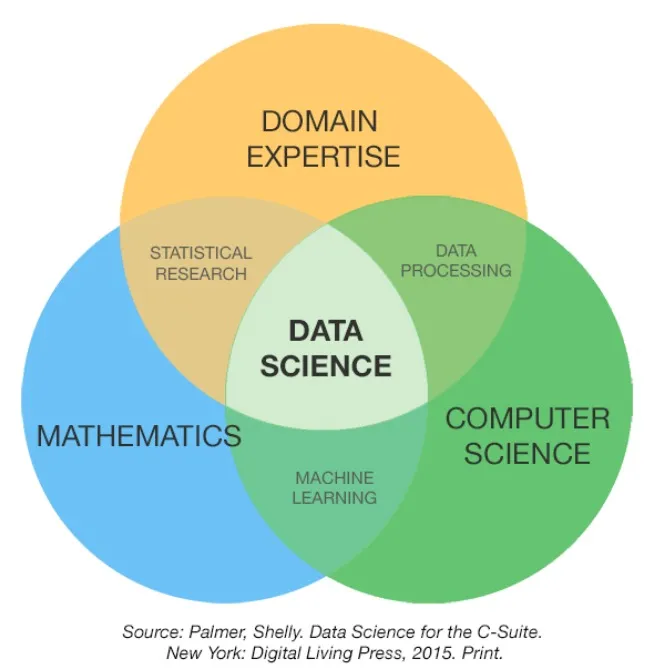
Data science, by combining advanced statistics, machine learning algorithms, and domain expertise, makes it possible to extract value from this data and make decisions that improve operations in terms of time, money, and safety.
The economic results are tangible. Global implementations already show 10-30% reductions in operating costs and production improvements of up to 8% through predictive maintenance and real-time optimization5.
In an industry where a single percentage point can mean millions of dollars, those margins translate directly into stronger cash flow and competitiveness.
For Argentina, this means the possibility of turning unconventional resources into sustainable exports that strengthen the country’s trade balance.
Use Cases Across the Production Chain
Oil companies, both in Argentina and globally, are applying data science across every stage of the production chain.
Upstream (Exploration and Production)
At the top of the chain, data science accelerates exploration: deep learning algorithms process 3D seismograms and highlight structures with the highest probability of containing hydrocarbons, allowing geologists to discard low-potential zones before drilling.

Once in production, predictive maintenance uses sensors on pumps, wellheads, and drilling equipment to anticipate out-of-range vibrations, temperatures, or pressures, so repairs can be scheduled at the optimal window and costly well shutdowns are avoided.
Midstream (Transport and Storage)
Pipelines stretch thousands of kilometers, and any crack means lost product, fines, and environmental risk. That’s why predictive maintenance algorithms are critical: they continuously ingest pressure, flow, and internal corrosion data, detect anomalous patterns, and estimate the probability of a leak days in advance.
Complemented by drones or robots that inspect the inside of the pipeline, they enable intervention exactly where needed, reducing downtime and ensuring supply6.
Downstream (Refining and Commercialization)
In the final stage, data helps balance supply and demand. Time series models forecast fuel consumption weeks ahead based on sales history, weather, and economic activity, so refineries can avoid both costly overstock and fuel shortages at service stations, optimizing their production plans.
Additionally, chatbots powered by natural language products handle internal users and end customers: answering questions about fuel quality, safety standards, or delivery routes, reducing the load on support centers and improving the consumer experience.
The examples above are just a small sample of possibilities that emerge from interviews with industry professionals and academic research. There are likely many other use cases not covered in this article (if you know of one, drop a comment!).
Barriers to Data Science Adoption
While the advantages of analytics are clear, projects tend to stumble over three recurring obstacles:
-
The first is data quality and availability: data originates in disparate systems with no common standards and ends up scattered across silos that make serious modeling difficult.
-
The second is specialized talent. While Argentina has trained numerous geologists and engineers with deep field knowledge, few of them also command Python, SQL, and machine learning methods. Conversely, data scientists know the algorithms but lack industry-specific expertise.
-
The third barrier is cultural. For decades, decision-making relied on the experience of field professionals; replacing that intuition with algorithm-based recommendations generates distrust and resistance to change. In this webinar we discuss a framework we developed that aims to address (at least partially) these obstacles.
What Do Companies Need to Overcome These Challenges?
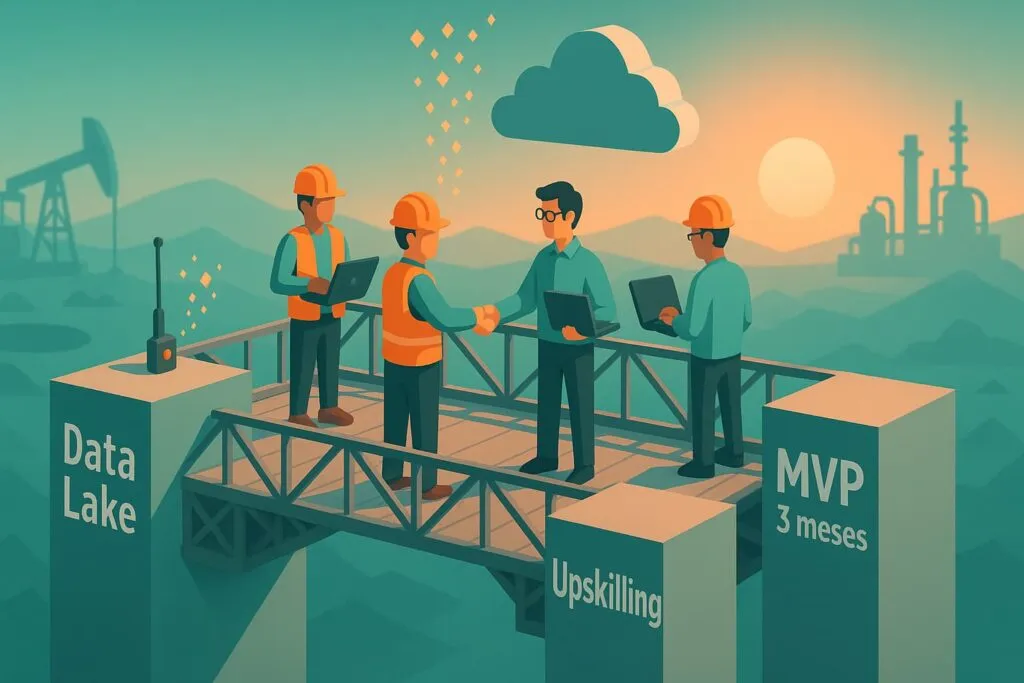
First, unify the data infrastructure into a data lake (preferably cloud-based). Additionally, establish data governance policies that follow an international standard. This way, every data point, dashboard, and report becomes accessible and reliable. This is a fairly common problem, and we’ve covered the topic and how to solve it in this webinar.
Second, invest in upskilling programs that combine the expertise of both profiles: production engineers learn data analysis and processing, while data analysts immerse themselves in geology and operations.
Finally, start with projects that deliver quick business impact: for example, a 3-month MVP with the goal of developing a predictive maintenance alert that prevents an unexpected shutdown. If successful, this initiative would reduce downtime and deliver a direct operational impact.
By following these recommendations, adopting a data-driven culture stops being a slogan and becomes a standard across the company.
It’s worth noting that these recommendations apply well beyond oil and gas; they can be implemented in almost any industry. Personally, I’ve seen that both the barriers and the recommendations are recurring themes across sectors.
Conclusions
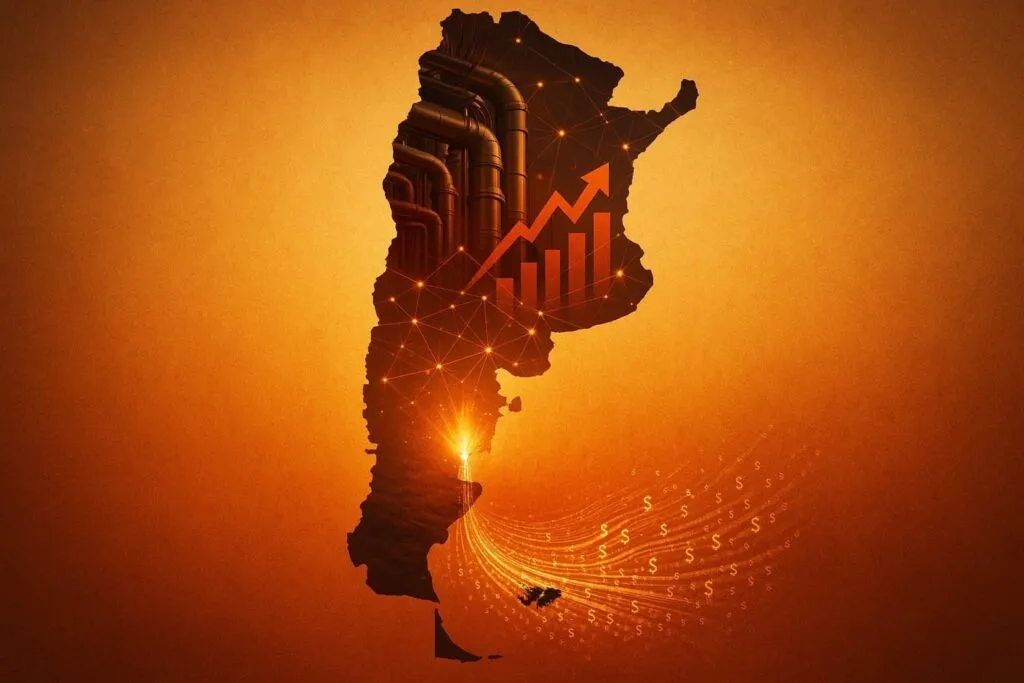
Argentina is at an exceptional crossroads:
- It holds one of the largest unconventional resource reserves on the planet,
- It has infrastructure expanding with strategic pipelines,
- And at the same time, there’s a macroeconomic urgency that demands rapidly turning those geological assets into foreign currency.
In this scenario, data science is neither a luxury nor a fringe experiment. It’s the lever that can accelerate the learning curve of the entire industry and improve ROI across exploration, drilling, transport, and refining.
International experience shows that advanced analytics reduces failures, optimizes energy consumption, and sharpens demand forecasts with precision unthinkable a decade ago. Importing that practice and adapting it to Argentina’s reality (with its particular geology, supplier dispersion, and regulatory volatility) represents less of a competitive advantage and more of a survival requirement.
Fortunately, we’re not starting from zero. Argentine companies already have sensor networks, extensive production histories, and technical talent with deep domain knowledge. Those who act first will reap the benefits of lower operating costs, higher production, and access to demanding markets.
In upcoming posts, I’ll dig into each of these use cases.
References
Footnotes
-
Secretaría de Energía de la Nación. Argentina tuvo un año histórico en la producción de hydrocarbons. February 2025. Argentina.gob.ar ↩
-
Radio Nacional. Producción gasífera 2024: mayor volumen en 17 años. January 2025. Radio Nacional ↩
-
BNamericas. Panorama del sector petrolero de Vaca Muerta en 2025. March 2025. BNamericas ↩
-
Ámbito Financiero. Prevén superávit energético de USD 30.000 millones para Vaca Muerta en 2030. November 2024. Ámbito Financiero ↩
-
McKinsey & Company. Digital transformation in energy: Achieving escape velocity. 2023. McKinsey ↩
-
Pipeline & Gas Journal. Predictive Maintenance in Pipelines. 2024. Pipeline & Gas Journal ↩


