
Oil & Gas 4.0: key challenges the industry faces when adopting AI

Digital transformation in the oil and gas industry promises major improvements in efficiency, safety, and cost1. In this industry, even a small optimization opportunity generates massive returns.
As you might imagine, these promising results don’t come without first overcoming certain barriers. To my surprise, after speaking with leaders from several companies in the sector, I found that the biggest obstacle these companies face isn’t technology. It’s organizational culture.
In the previous article, as part of an academic research project I’m conducting on the sector, I introduced the opportunities for growth using data science.
In this piece I’ll expand on those points, sharing some international studies on cultural barriers in Oil & Gas, the situation in Argentina, and finally reviewing some success stories from companies that managed to overcome these challenges.
Cultural barriers at a global level
Multiple global studies and reports agree that cultural barriers (resistance to change, digital skills gaps, and traditional hierarchical structures) are the main challenges companies in this sector face when trying to adopt digitalization successfully2.
Let’s look at these barriers in detail:
1. Resistance to change
Resistance from employees and executives to new ways of working is frequently cited as the number one barrier.
This makes a lot of sense given that the oil industry values safety, precision, and predictability, so it struggles to adopt work philosophies where “the right to fail” is normalized. In this industry, making a mistake can be very, VERY costly.
As a result, this cultural risk aversion has made the sector slower than others to innovate with advanced digital technologies.
2. Digital talent gaps
Oil & Gas companies report having two very distinct profile types:
- Young professionals who grew up in the digital era, with strong skills in systems, AI, and automation, but limited understanding of the business operations and regulations specific to the oil industry.
- Experienced professionals who master business processes (exploration, drilling, production, transportation, etc.). They typically hold mid-level and senior positions, but sometimes struggle to see value in innovation or don’t fully grasp the scope of new technologies3.
The challenge is mainly how to reconcile these profiles. Young employees push for agility and innovation; senior staff prioritize safety, repeatability, and above all: not disrupting the business. This gap, both generational and skill-based, slows down transformation.
3. Inflexible hierarchical structures
Rigid and fragmented organizational culture hampers the collaboration needed for digital transformation. Many of these companies operate with departmental silos (e.g., operations vs. IT) and strong hierarchies, which hinder agility.
In contrast, digitalization demands cross-functional collaboration and fast decision-making. Instead of strict top-down management, organizations need to democratize the use of data and empower teams at all levels to innovate, which clashes with highly hierarchical cultures.
What do the numbers say?
Global statistics reveal how hard it is to take digital transformation in oil and gas from talk to concrete results:
70% of digital initiatives fail or stall
A Mendix analysis reported that 70% of digital transformation initiatives fail to meet their goals, primarily due to a lack of cultural adaptation within the organization4. Similarly, McKinsey estimated that roughly 70% of digital projects fail to move past the pilot phase to full-scale deployment5.
In other words, many companies can implement successful proofs of concept or pilots in a single unit, but can’t scale those solutions across the rest of the organization.
Lagging digital maturity in O&G
A joint McKinsey & Harvard Business Review study (2024) comparing digital maturity across 22 sectors gives oil & gas an average score of 2.88 / 5, below the cross-sector average (3.03) and far behind financial services (4.50) or advanced manufacturing (3.75). Moreover, only 7% of the 200+ companies analyzed consider themselves “digital champions,” confirming the sector’s structural lag compared to much more tech-intensive industries6.
In short, the numbers paint a challenging picture: the vast majority of digital transformations in oil and gas fail to fully consolidate. But at the same time, those few that succeed demonstrate that the rewards are worth it (operational efficiencies, safety improvements, cost reductions, etc.). This underscores the importance of focusing efforts on change management and implementation strategy, not just on the technology itself.
Success stories in change management
Despite the barriers, several Oil & Gas companies have found successful ways to drive cultural and digital change. These cases offer practical lessons on how to manage transformation:
-
Shell, democratizing analytics: The Anglo-Dutch company adopted a “citizen innovation” approach. It created an AI Center of Excellence and internal programs so business employees could become “citizen data scientists.” For example, Shell partnered with the Udacity platform to train its workforce in artificial intelligence and data skills, so they could develop and deploy solutions at scale themselves. This investment in mass upskilling has allowed Shell to democratize digital tools across the entire company, reducing exclusive reliance on specialists and fostering a culture where innovation comes from every level7.
-
Saudi Aramco, the LEAP Program: The Saudi national oil company launched an ambitious comprehensive program called LEAP (Lead Digital Strategy, Enable Technology, Accelerate Innovation, Promote a Digital Culture). Aramco placed emphasis on promoting a digital culture: it established an upstream Digital Innovation Center, agile cross-functional teams, and massive training programs (for example, training over 6,000 developers in AI) to ensure the transformation is driven by its people. The result has been a tangible shift in the organization, to the point that Aramco highlights its transformation today “rests on its employees and their pursuit of excellence,” with a workforce more open to new ideas and collaborative digital solutions8.
-
SOCAR Turkey, agile transformation: Petrochemical company SOCAR in Turkey undertook a digital transformation that prioritized cultural change through agile methodologies. They started with pilots in a single plant (PTA unit), forming autonomous cross-functional teams and internal “change champions” to evangelize the new way of working. They focused on clear objectives (increase production, improve safety, raise employee engagement) and achieved strong improvements across all fronts during the pilot9. The key to success was involving people from the start by maximizing transparency and communication to achieve cultural buy-in. After the successful pilot, SOCAR scaled the agile model across the entire company. In recognition, their plant was added to the World Economic Forum’s Global Lighthouse network for its digitalization progress. This case proves that even in heavy industries, organizational agility and employee empowerment can accelerate technology adoption and generate measurable results10.
In conclusion, many companies have implemented change management tactics such as internal “Data Champions” programs, frequent communication of “quick wins” to convince skeptics, and democratization of digital tools.
The general recommendation is also to start with high-impact use cases to build traction and pair it with a robust change plan. Creating networks of digital ambassadors within the organization (enthusiastic employees who train their peers) is also encouraged to shift the culture from within.
The Argentine reality
The cultural challenges identified internationally have a clear echo in Argentine oil companies. Local studies and surveys show that the same barriers appear in the domestic industry.
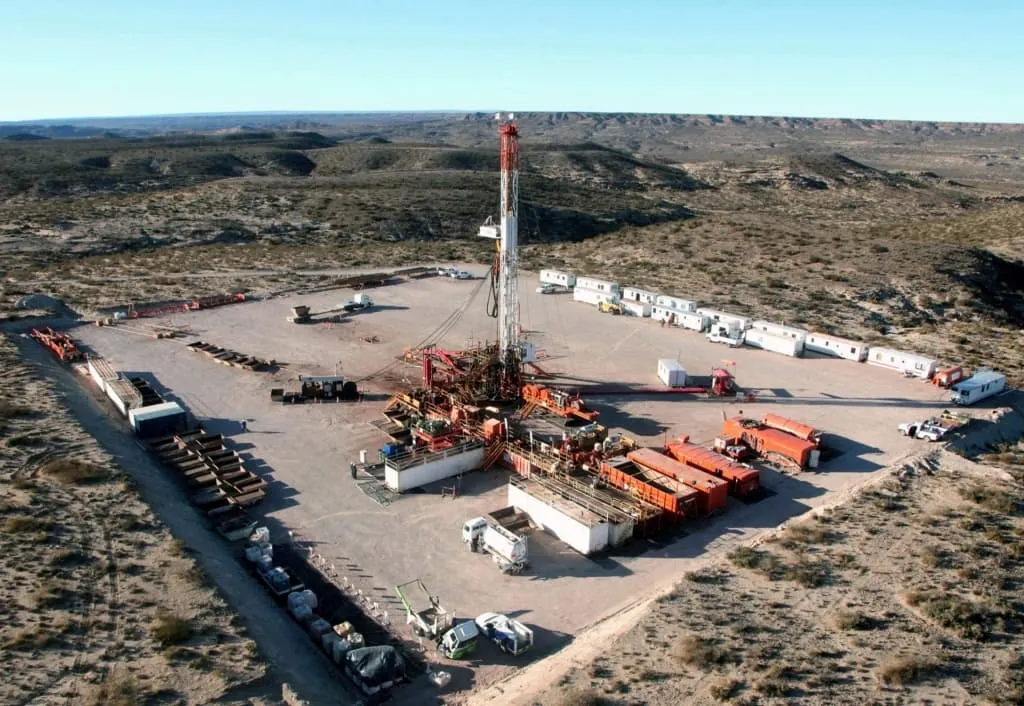 Oil well in Vaca Muerta
Internal resistance and traditional culture
Executives in Argentina’s oil sector have publicly acknowledged that corporate culture lags behind technology. In a conversation with Mas Energia, Juan Martin Bulgheroni (VP of Upstream Operations at PAE) summarized it: “The new generations need to use technology in their daily work and the industry is behind… it’s losing competitiveness in that sense. As companies, we have to embrace those changes”11.
This statement captures a common sentiment: there’s a generational and cultural clash where young employees demand modern tools, while many processes remain anchored in 20th-century paradigms.
In recent interviews with Argentine companies, there are explicit mentions of “cultural resistance” in digital projects, especially among long-tenured employees, and the need to “democratize data science” rather than concentrating it in a single specialized team. In other words, the same patterns of cultural inertia identified globally are present in local operators, with staff who distrust new solutions until they see results, middle managers afraid of losing control, or simply a lack of habit in using data for decision-making.
Lack of skills and digital roles
Argentine oil companies also face technology talent gaps. Several have created digital centers of excellence or partnerships with consultancies to fill the shortage of experts in data, AI, or automation.
However, the challenge of improving general “data literacy” across staff persists. According to local leaders, a significant obstacle is “retaining young” tech professionals and ensuring their innovative ideas are heard in traditional organizations.
Internal training is starting to take shape, but many firms admit that advanced analytics knowledge is today concentrated in a few roles, creating bottlenecks (for example, a Data Center of Excellence that can’t keep up with demand from all business areas). This mirrors at a national scale what happens globally: the shortage of broad digital capabilities and the importance of training and empowering existing talent.
Change initiatives in local companies
Despite the barriers, there are also local success stories. Several operators in Argentina have launched digital transformation programs with an emphasis on cultural change.
For example, Pampa Energia implemented cross-cutting programs aimed at data-driven, real-time decision-making12. Pan American Energy (PAE) focused its digitalization on centralizing programming capabilities and “integrating them across the value chain,” while simultaneously equipping field employees with digital tools to improve productivity and safety13. These initiatives reflect a vision of empowering employees with data.
Meanwhile, Tecpetrol reports having embarked on a “major digital transformation” after realizing that productivity depended on changing their processes; they describe moving toward “extreme digitalization” in mobile operations to achieve real-time efficiency14.
A common thread in these cases is that companies started by aligning digital transformation with clear business needs (optimizing logistics, predicting demand, reducing downtime) and are trying to pair the technology with changes in how people work.
While many of these local initiatives are still in early or pilot stages, they lay the groundwork for a gradual cultural shift: encouraging daily use of digital tools by operators, breaking the myth that “technology replaces humans” by showing it improves safety, and creating the first internal champions who spread the benefits.
Final thoughts
In conclusion, Argentine oil and gas companies face very similar cultural challenges (resistance to change, digital skills deficits, rigid structures) that must be addressed for digital transformation to take off.
The good news is that steps are already being taken in the right direction: there’s growing awareness among local leaders that transformation is more cultural than technological, and change management strategies inspired by global best practices (communication, training, pilots with tangible results, etc.) are beginning to emerge. Integrating these international lessons with local particularities will be key for the Argentine oil industry to fully seize the digital opportunity and not fall behind in the new energy economy.
References
Footnotes
-
Hansmann, T., Tan, K. T., Zhou, Y., & Loh, Y. W. (2022, September). Harnessing volatility: Technology transformation in oil and gas. McKinsey & Company. https://www.mckinsey.com/capabilities/operations/our-insights/harnessing-volatility-technology-transformation-in-oil-and-gas ↩
-
Alshibani, A., Alkhathami, S. M., Hassanain, M. A., Tuffaha, F., Ouis, D., & Mohammed, A. (2024). Hybrid framework for investigating digital transformation barriers in the oil and gas sector. Energies, 17(23), Article 6151. https://doi.org/10.3390/en17236151 ↩
-
Jackman, M., & Perdue, J. M. (2025, April 1). Navigating the oil and gas generation gap. Journal of Petroleum Technology. https://jpt.spe.org/navigating-the-oil-and-gas-generation-gap ↩
-
Mendix. (2023). 5 digital transformation trends for growth in 2023: Why do 70 % of digital transformations fail? https://www.mendix.com/blog/digital-transformation-trends-for-growth/ ↩
-
Kiewell, D., Meynerts, S., & Neher, D. (2020, October). McKinsey. Getting to scale with digital in oil and gas. https://www.mckinsey.com/capabilities/operations/our-insights/getting-to-scale-with-digital-in-oil-and-gas ↩
-
Garton, E., & Mankins, D. (2024). Monetizing digital: A new frontier for oil and gas. Harvard Business Review. https://hbr.org/research/topics/digital-transformation ↩
-
Shell. (2022). Shell AI: Democratizing data science across the organization. Shell Corporate Report. https://www.shell.com/energy-and-innovation/digital/transformation.html ↩
-
Saudi Aramco. (2023). LEAP Conference: Accelerating digital transformation. Saudi Aramco Annual Review. https://www.aramco.com/en/leap ↩
-
SOCAR. (2022). Digital Transformation: From Pilot to Scale. SOCAR Corporate Case Study. https://www.socar.az/en/page/digital-transformation ↩
-
World Economic Forum. (2023). Global Lighthouse Network: Insights from the Frontier of Transformation. WEF Report. https://www.weforum.org/publications/global-lighthouse-network/ ↩
-
Bulgheroni, J. M. (2025). Interview on digital transformation in Argentine Oil & Gas. Mas Energia. https://www.masenergia.com.ar ↩
-
Pampa Energia. (2024). Sustainability and Digital Transformation Report. https://www.pampaenergia.com ↩
-
Pan American Energy. (2024). Digital Strategy and Capabilities. PAE Corporate Communications. ↩
-
Tecpetrol. (2024). Digital Transformation in Operations. Tecpetrol Annual Report. ↩


